
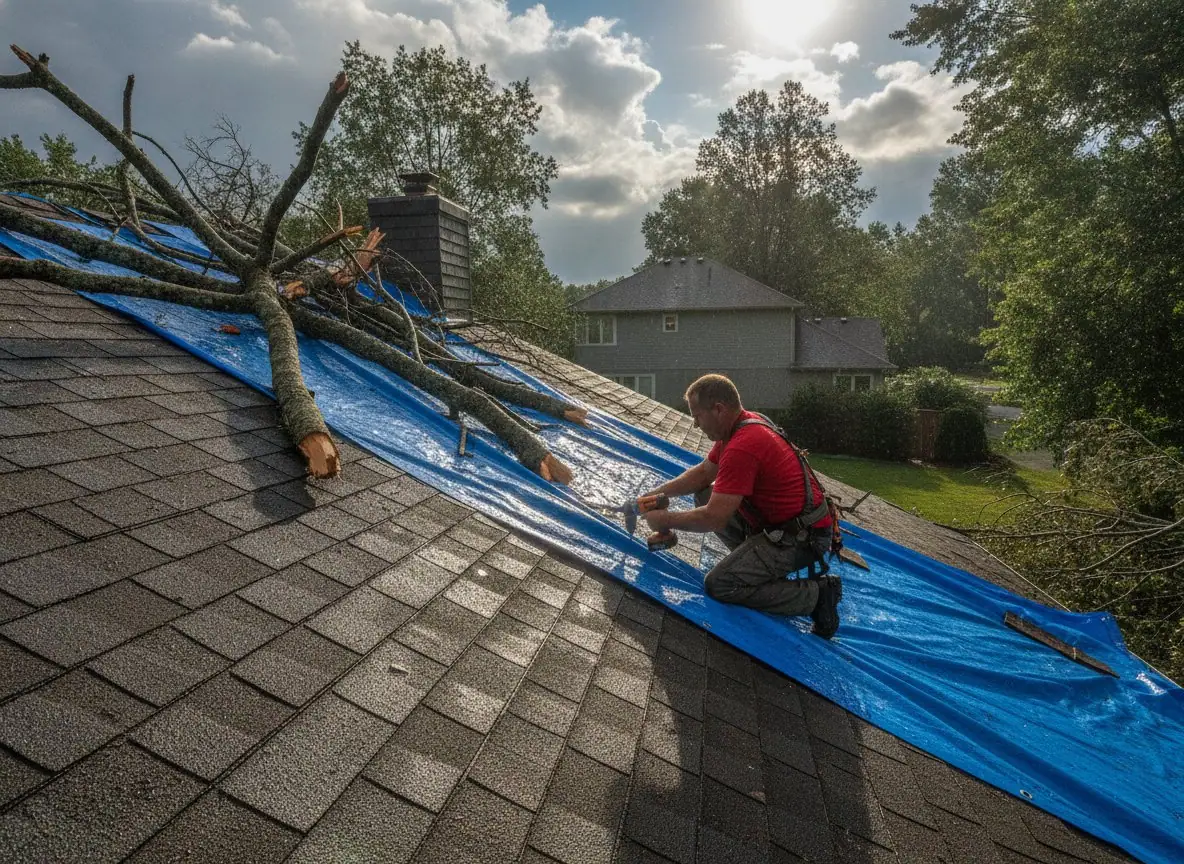
Roof Repair Costs for a Leaking Roof in Chamblee, GA
Roof repair costs for a leaking roof in Chamblee depend on three things: where the water is getting in, how far it has traveled, and what it takes to reach and fix the source. A cracked pipe boot on a low-slope ranch roof is a very different job from failed chimney flashing on a steep two-story home where water has already soaked the decking and stained the ceiling below.
This page explains what drives the price of a leak repair, how repairs are grouped by scope, when insurance may help, and when a patch is enough or replacement makes more sense. Top Notch Guard Roofing offers free inspections and gives a written quote after we have seen the roof, so you know the actual scope and price before any work begins.
How much would it cost to repair a leaking roof?
Commonly published national figures put most minor to moderate leak repairs at roughly $150 to $1,500, with many homeowners paying around $350 to $1,420, and extensive or structural repairs running $1,500 to $5,000 or more. These are general industry ranges, not Top Notch Guard Roofing quotes. Your price is set by what we find on your roof.
Those ranges are wide because "a leak" can mean almost anything. Water that shows up on a ceiling often enters the roof several feet away, runs along a rafter or the top of the decking, and drips wherever gravity takes it. Until the entry point is found, nobody can say whether the fix is a new pipe boot, a resealed counter-flashing joint, or a section of rotted plywood that needs to come out.
Read moreShow less
A useful way to think about the cost is in layers:
- The source repair: the shingle, flashing, boot, seal or valley that failed.
- Underlying damage: wet or soft decking, saturated underlayment, rusted nails.
- Interior damage: wet insulation, stained or sagging drywall, mold-prone areas in the attic.
- Access and conditions: roof pitch, height, and whether the work is urgent, such as after a storm.
Most of the price difference between one leak and another comes from the second and third layers, which raises the obvious question of whether leaks are usually costly to deal with.
Are roof leaks expensive to fix?
Most roof leaks are not expensive to fix when they are caught early, but they become expensive quickly when they are left alone. A small, isolated leak with a clear source is often one of the more modest repairs a roof needs.
The cost climbs because water damage compounds. Here is how a typical neglected leak progresses:
- A flashing seal or shingle fails, and water reaches the underlayment.
- Underlayment holds for a while, then water reaches the wood decking.
- Repeated wetting softens the decking and loosens nails, so more shingles lift.
- Water soaks attic insulation, which loses its effectiveness and stays damp.
- The ceiling stains, then sags; drywall may need replacement.
Chamblee's heavy summer thunderstorms and humid weather mean a slow leak rarely gets a chance to dry out between rains. A repair that would have involved one flashing detail in spring can involve decking, insulation and drywall by fall. To see how these stages translate into scope, it helps to sort repairs into minor, moderate and major tiers.
Free, no-obligation estimates
Talk to Top Notch Guard Roofing
Tell us what you need and we’ll take it from there.
At a glance
What do minor, moderate and major leak repairs cost?
Minor repairs sit at the low end of published ranges, moderate repairs in the middle, and major repairs involving structural or storm damage at the high end and above. The table below shows how the work is usually grouped.
| Scope | Typical work involved | General published range |
|---|---|---|
| Minor | Replacing a few missing or cracked shingles, replacing a failed pipe boot, sealing spot leaks around fasteners or small openings | About $150 to the mid-hundreds |
| Moderate | Chimney, vent or skylight flashing repair; valley flashing repair; replacing larger shingle areas; replacing small sections of decking | About $350 to $1,500 |
| Major | Widespread or multiple leaks, structural damage to decking or framing, storm damage, tree impact | About $1,500 to $5,000+ |
Source note: ranges reflect commonly cited national cost figures summarized in general search results. They are not prices from Top Notch Guard Roofing and do not account for conditions on your specific roof. We confirm scope and price in writing after a free inspection.
A few points the tiers do not show:
- Flashing repairs at chimneys, skylights and valleys often fall in the moderate tier even when the visible leak is small, because shingles have to be lifted and reset around the flashing.
- A minor repair can become moderate once the roof is opened and soft decking is found underneath.
- Emergency roof tarping after a storm is a separate, temporary step that protects the home until permanent repairs are scheduled.
Which tier your leak falls into depends on a specific set of cost factors.
At a glance
What factors affect the price of fixing a leaking roof?
The main factors are roofing material, roof pitch and height, the extent of hidden damage, the size of the repair area, whether tear-off is needed, and the cause of the leak, which also affects whether insurance helps pay.
| Factor | Why it changes the price |
|---|---|
| Roofing material | Asphalt shingles are usually simpler to match and replace than tile, slate or metal, which need specialized handling and harder-to-find matching pieces. |
| Pitch and height | Steep or multi-story roofs require more safety equipment, staging and time. A walkable low-slope roof is faster to work on. |
| Size of repair area | A single pipe boot is a small, contained job. A failing valley or a large section of wind-lifted shingles covers more square footage. |
| Leak location | Leaks at chimneys, skylights, walls and valleys involve flashing, sealing and careful shingle integration. |
| Hidden damage | Rotted decking, wet insulation and damaged ceilings add material and labor that cannot be confirmed until the area is inspected or opened. |
| Tear-off | If old layers must be removed to reach sound decking, labor and disposal increase. |
| Permits | Smaller repairs often do not require a permit, while larger structural work may. Requirements are checked as part of the quote. |
| Urgency | After-hours or storm response may include emergency tarping before the permanent repair. |
| Cause and coverage | Sudden storm damage may be partly covered by insurance; wear and maintenance issues usually are not. |
For a closer look at these factors on typical jobs, see our roof leak repair cost in Chamblee guide. Hidden damage is the factor homeowners most often underestimate, which is why it is worth understanding how serious a leak really is.
How serious is a leaky roof?
A leaky roof is serious enough to address promptly, even when the drip seems small, because the damage you can see is usually less than the damage you cannot.
Risks of leaving a leak unrepaired include:
- Structural decay: wet decking and rafters weaken over time and may need replacement.
- Mold and mildew: damp attics in a humid climate can support mold growth.
- Insulation loss: soaked insulation compresses and stops performing, which can affect comfort and energy use.
- Electrical hazards: water traveling near light fixtures or wiring is a safety concern.
- Ceiling failure: water pooling above drywall can cause sagging or collapse.
- Insurance complications: long-term, unaddressed leaks are more likely to be classified as neglect.
Read moreShow less
Signs that call for an inspection soon: water stains or bubbling paint on ceilings, damp spots in the attic, daylight through roof boards, granules collecting in gutters, missing or lifted shingles after wind, and musty odors upstairs. If water is actively coming in during a storm, Top Notch Guard Roofing offers 24/7 emergency service and emergency roof tarping to limit further damage. The good news is that most leaks can be fixed without replacing the whole roof.
At a glance
How do you fix a leaking roof without replacing it?
You fix a leaking roof without replacing it by finding the exact entry point and repairing that component, whether it is a shingle, pipe boot, flashing detail, valley or a worn surface that needs a coating or waterproofing treatment.
A typical professional repair follows these steps:
- Inspect inside and out: trace stains in the attic back to the entry point and check the roof surface above.
- Protect the home if needed: tarp the area if more rain is expected before permanent repair.
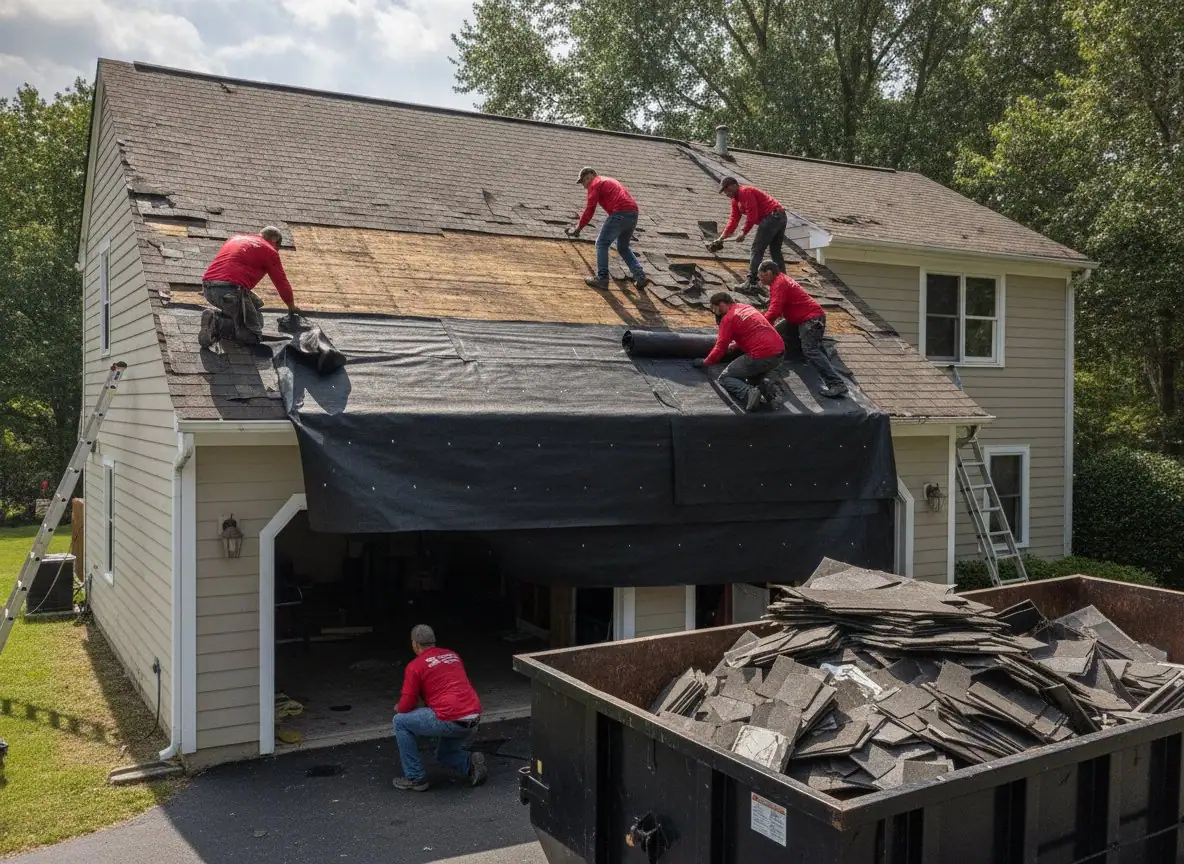
- Remove damaged materials: lift or remove shingles around the source and check underlayment and decking.
- Repair the source: replace the pipe boot, rebuild chimney or skylight flashing, repair valley flashing, or replace damaged shingles.
- Replace soft decking if found, then install new underlayment.
- Reinstall and seal: integrate new shingles and flashing so water sheds correctly.
- Verify: confirm the area is watertight and document the work.
Our repair-focused services include roof leak repair, chimney flashing repair, chimney waterproofing, skylight flashing repair, skylight waterproofing, valley flashing repair, roof waterproofing and roof coating application. You can review them on our roof flashing repair and waterproofing services page.
Repair vs. replace decision guide
| Situation | Repair usually makes sense | Replacement may be smarter |
|---|---|---|
| Number of leaks | One or two isolated leaks with clear sources | Multiple leaks in different areas |
| Roof age and condition | Shingles still flexible and holding granules | Widespread curling, cracking or bald shingles |
| Decking | Sound decking or small soft sections | Soft or rotted decking across large areas |
| Repair history | First or occasional repair | Repeated repairs that keep failing |
| Damage area | Localized to a flashing detail, boot or valley | Large share of the roof surface affected |
Because many leak repairs look simple from the ground, homeowners often wonder whether a general handyman can handle them.
Can a handyman fix a roof leak?
A handyman can sometimes handle a very simple, easy-to-reach repair such as resealing an exposed fastener, but most leaks are better handled by a roofer because the hard part is diagnosis and flashing work, not applying sealant.
Considerations before hiring a handyman:
- Diagnosis: water travels, so patching where the stain appears may miss the real source.
- Flashing skill: chimney, skylight and valley leaks require correct step flashing, counter-flashing and shingle integration, not just caulk.
- Hidden damage: a roofer checks the decking and underlayment while the area is open.
- Safety: steep or high roofs require proper fall protection.
- Insurance documentation: if you plan to file a claim, documented inspection findings matter.
- Coverage: ask whether the person working on your roof is insured. Top Notch Guard Roofing is insured.
Choosing who does the repair can also affect how an insurance claim goes, which leads to the coverage question.
At a glance
Will homeowners insurance pay for a leaky roof?
Homeowners insurance may pay for a leaky roof when the damage comes from a sudden, covered event such as wind, hail or a fallen tree, minus your deductible, but it typically does not pay for leaks caused by age, wear or lack of maintenance.
| Often covered (sudden events) | Usually not covered (wear and neglect) |
|---|---|
| Wind that lifts or tears off shingles | Shingles worn out from age |
| Hail impact damage | Slow leaks left unrepaired over time |
| Tree or limb falling on the roof | Deteriorated or cracked pipe boots from age |
| Sudden storm-driven water intrusion through new damage | Flashing failure from long-term weathering or poor original installation |
| Interior damage resulting from a covered roof event | Mold or rot from ongoing moisture |
Every policy is different, so review your declarations page and exclusions. Practical steps after storm damage:
- Photograph the roof (from the ground), ceilings and any debris.
- Prevent further damage with tarping, and keep receipts.
- Schedule an inspection to document the cause and scope.
- Contact your insurer and meet the adjuster with documentation ready.
Top Notch Guard Roofing helps homeowners with insurance claims by documenting damage and explaining the repair scope. Coverage decisions are made by your insurer. When a leak is not covered, some homeowners consider patching it themselves to save money.
Is DIY patching worth it?
DIY patching is worth it only as a short-term stopgap for a minor emergency spot, such as applying wet-patch roof cement to a small, visible hole during rain, until a proper repair can be made.
Where DIY can help:
- Placing buckets and moving belongings away from drips.
- Poking a small drain hole in a bulging ceiling stain to release water in a controlled way, if safe.
- Applying wet-patch cement to an obvious small opening on a low, walkable roof.
Where DIY falls short:
- Sealant smeared over flashing can trap water and make the real repair harder.
- Patches rarely address the actual source or check the decking underneath.
- Climbing a wet or steep roof is dangerous.
- Visible DIY work on storm damage may complicate an insurance claim.
If you do patch, treat it as temporary and schedule a professional inspection, which is also the only way to get a reliable price.
How do I get an accurate roof repair price in Chamblee?
The way to get an accurate roof repair price in Chamblee is to have the roof and attic inspected so the leak source and any hidden damage are identified, then get a written quote based on those findings.
What to expect from a Top Notch Guard Roofing free inspection:
- Discussion of where and when you see water, including which storms trigger it.
- Interior and attic check for stains, damp insulation and soft decking.
- Roof surface inspection of shingles, boots, flashing, valleys and penetrations.
- Explanation of the cause, the recommended repair and any alternatives.
- A written quote listing the scope of work.
Tips for comparing quotes: make sure each quote describes the same scope, note whether decking replacement is included or priced separately, and ask how the source of the leak was identified.
Read moreShow less
Cost guides and related pages
- Roof leak repair cost in Chamblee: price factors for common leak repairs
- Roof leak repair service: how we find and fix leaks
- Emergency roof tarping: temporary protection after storms
- All roofing and waterproofing services
- About Top Notch Guard Roofing
- Contact us to schedule a free inspection
Financing: Financing is available for larger repairs. Ask about options when you receive your quote.
Disclaimer: Prices vary based on roof material, pitch, size, hidden damage, permits and the cause of the leak. Any ranges on this page are general published figures, not quotes. Your price is confirmed in writing after a free inspection.
To schedule a free inspection for roof leak repair in Chamblee, GA, call Top Notch Guard Roofing at 770-525-6302. Emergency service is available 24/7.
FAQ
Frequently asked questions
Why do two roofers quote different prices for the same leak?
Different quotes usually mean different scopes. One roofer may plan to reseal the visible area, while another plans to replace flashing and check the decking underneath. Differences in diagnosis, materials and whether hidden damage is included all affect the number. Compare what each quote actually covers, not just the total.
Does a free inspection obligate me to hire you?
No. The inspection and estimate are free, and you are under no obligation to hire us. You receive our findings and a written quote to review on your own terms.
What does a repair estimate include?
Our written quote describes the leak source, the repair work recommended, the materials involved, and any related work such as decking replacement or interior-adjacent concerns we identified during the inspection.
When is replacement smarter than repair?
Replacement may be smarter when there are multiple leaks across the roof, the shingles are worn out overall, large areas of decking are rotted, or repairs keep failing. If the leak is isolated and the rest of the roof is in good shape, repair is usually the practical choice. We explain which situation applies after the inspection.
Do you offer financing for larger repairs?
Yes. Financing is available. Ask about it when you call 770-525-6302 or when you review your written quote.
Why choose us
Why choose Top Notch Guard Roofing?
Free estimates
Get a clear, no-obligation estimate before any work begins.
Licensed & insured
Your property and our crew are protected on every project.
Residential & commercial
One team for homes, multi-family and commercial properties.
Locally owned & operated
A local team serving your community and the surrounding area.
Get in touch
Find roofing help near you
Request a free estimate online or give us a call — our team will follow up quickly.
- Call us770-525-6302
- Visit5449 Peachtree Rd, Chamblee, GA 30341
- HoursMon-Sun: 7:00 am – 7:00 pm