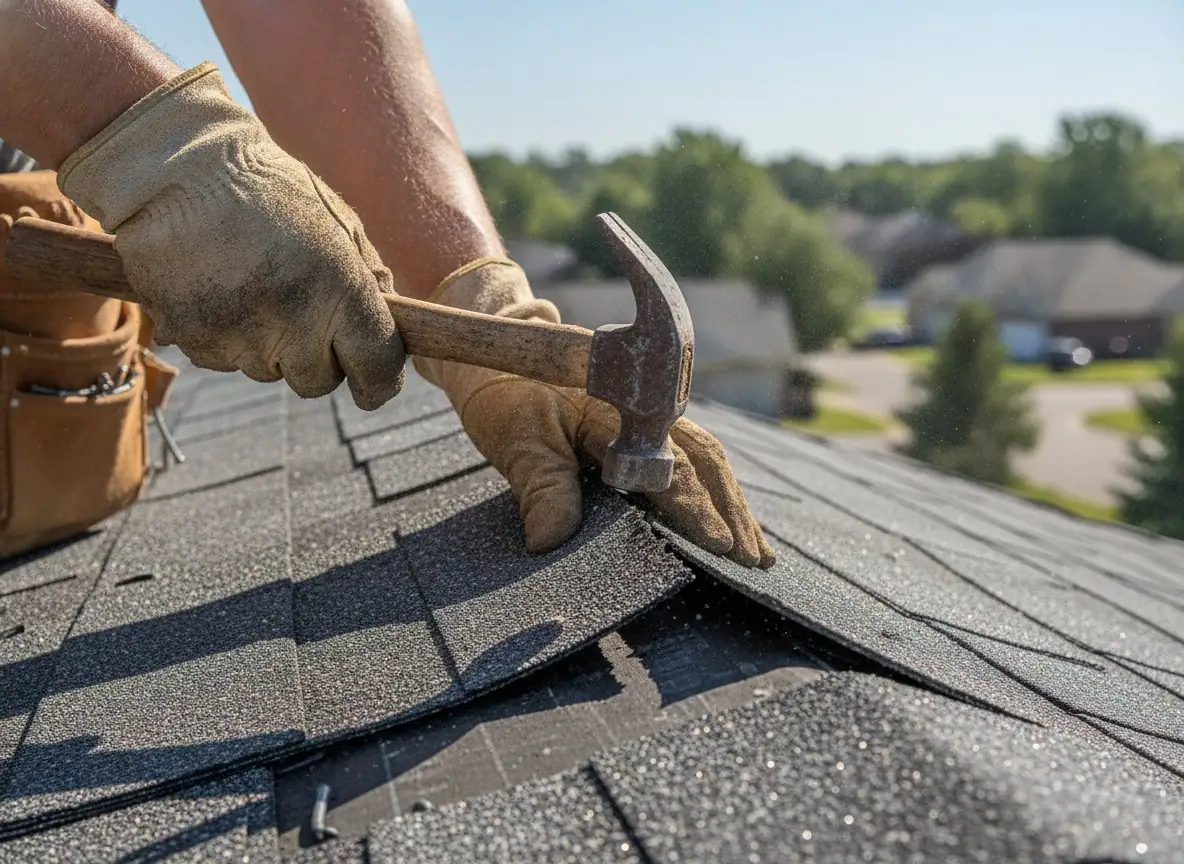
Roof Flashing Repair and Waterproofing Services in Chamblee, GA
Roof flashing repair is the fix for most leaks that show up around chimneys, skylights, valleys, vents and walls. In those places, water does not come through the shingles. It slips past the thin metal and membrane pieces that seal the joints. Top Notch Guard Roofing handles flashing repair and waterproofing for homes and commercial buildings in Chamblee, GA. This page explains how flashing works, where it fails, what a proper repair involves and what affects the price, so you can pick the right service and request a free estimate.
If water is coming in right now, call 770-525-6302. We offer 24/7 emergency service, including emergency roof tarping to protect the inside of your building until a permanent repair can be made.
Can roof damage be repaired?
Yes. Most roof damage can be repaired without replacing the whole roof, especially when the problem is limited to flashing, a few shingles or one leak point.
Whether you can fix a roof with a targeted repair or need a larger project usually comes down to three questions:
- Is the damage localized? A leak at one chimney, one skylight or one valley is a repair job. Widespread granule loss, curling across every slope or soft decking in many areas points to a bigger project.
- Is the surrounding roofing still sound? New flashing has to tie into shingles or membrane that can still shed water. If the field of the roof is near the end of its life, patching a roof only buys time.
- Is the decking dry and solid? Rotted plywood under a leak has to be cut out and replaced before any flashing or shingles go back on.
Read moreShow less
In Chamblee, summer thunderstorms, high humidity and heavy leaf and pine-needle debris put the most strain on roof joints. That is why so many repair calls trace back to flashing. Another common call involves torch-down or other membrane systems on flat and low-slope roofs, where seams and edge details open up over time. Since flashing is so often the culprit, it helps to know the names of the pieces involved.
At a glance
What is the flashing called where a roof meets a wall?
Where a sloped roof meets a vertical wall, the flashing is called step flashing, usually covered by a second piece called counter flashing.
Step flashing is a series of small L-shaped metal pieces. One piece is woven in with each course of shingles. One leg lies on the roof under the shingle, and the other leg runs up the wall. Counter flashing (also called cap flashing) is set into the wall or chimney mortar and laps down over the step flashing. Water that runs down the wall gets shed onto the roof instead of behind it. Where a flat or low-slope roof meets a wall, the joint is usually handled with a continuous base flashing and a counter flashing above it.
| Flashing type | Where it is used | What it does |
|---|---|---|
| Step flashing | Sloped roof against a sidewall, dormer or chimney side | Individual pieces woven with each shingle course carry water back onto the roof |
| Counter flashing | Over step or base flashing at walls and chimneys | Set into mortar or siding and laps down to keep water from getting behind the base flashing |
| Valley flashing | Where two roof slopes meet in an inside corner | Lines the channel that carries the heaviest concentrated water flow on the roof |
| Chimney flashing | All four sides of a masonry or framed chimney | Combines apron, step, counter and a back cricket or saddle to seal the full perimeter |
| Skylight flashing | Around the skylight curb or frame | Head, side and sill pieces, often a manufacturer kit, that seal the opening |
Labeled diagram: roof-to-wall flashing, from the outside in
- Siding or masonry: the vertical wall surface.
- Counter flashing: tucked into a mortar joint (reglet) or behind siding, angled down over the step flashing.
- Step flashing: L-shaped pieces, roughly half on the wall and half on the roof.
- Shingle: each course laps over one piece of step flashing.
- Self-adhered ice-and-water membrane: runs up the wall a few inches and out onto the deck under everything.
- Underlayment: the secondary water barrier across the roof deck.
- Roof decking: plywood or OSB sheathing.
Every layer in that stack depends on the one above it overlapping in the right direction. That explains where flashing tends to break down first.
Free, no-obligation estimates
Talk to Top Notch Guard Roofing
Tell us what you need and we’ll take it from there.
Where does roof flashing fail most often?
Flashing fails most often at chimneys, skylights, roof valleys, roof-to-wall joints and around pipes and rooftop equipment, because those are the places where water concentrates or where two different materials meet.
- Chimneys: Mortar joints crack and counter flashing pulls loose. A wide chimney without a cricket on the uphill side traps water and debris. Brick chimneys on older Chamblee homes are a frequent source of attic stains.
- Skylights: Sealant around the curb dries out, flashing kits get installed out of order, or the skylight frame itself leaks. These are different problems with different fixes.
- Valleys: Valleys carry runoff from two slopes. Pine needles and leaves dam them, metal corrodes, and shingles cut too short let water run sideways under the roofing.
- Walls and dormers: Missing kickout flashing at the bottom of a wall sends water into the siding. Step flashing that was face-nailed or caulked instead of woven also lets water in.
- Vents, pipes and rooftop equipment: Rubber pipe boots crack in the sun. Flashing around HVAC curbs, exhaust fans and other rooftop equipment loosens from vibration and movement. This is common on commercial and low-slope roofs.
- Flat-roof edges and seams: On torch-down and other membrane roofs, base flashings at parapets and seams at penetrations are typical leak points.
Read moreShow less
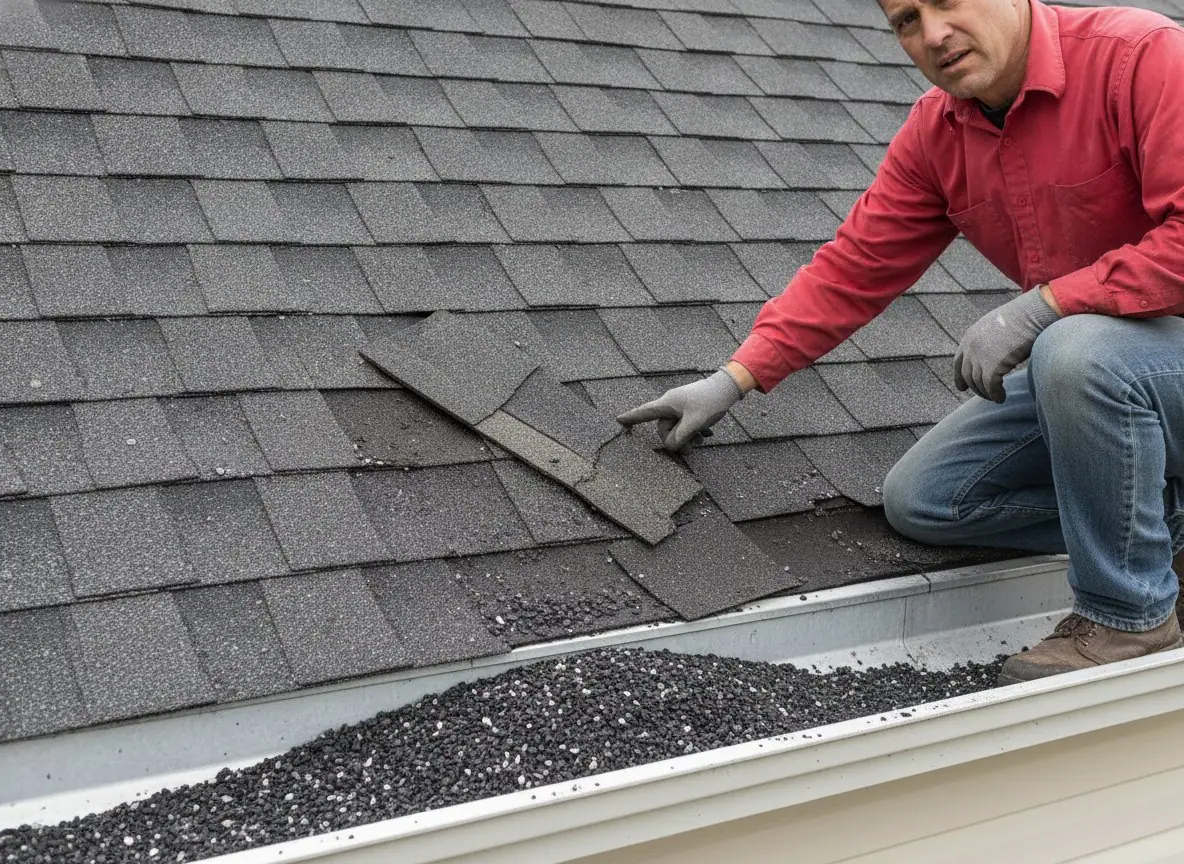
Common warning signs include stains on the ceiling near a chimney or skylight, damp drywall along an exterior wall, rusted or lifted metal, dried caulk standing in for flashing, and shingle granules collecting in a valley. Once the failure point is found, the fix follows a specific order.
How do roofers put roof flashing on?
Roofers install flashing in layers from the bottom of the roof upward. Each piece overlaps the one below it so water is always shed outward. On a repair, that means removing the surrounding roofing, fixing anything underneath and rebuilding the joint in the right order.
Our flashing repair process
- Inspect and confirm the source. We check the roof surface, the flashing and, when accessible, the attic, so we repair the actual entry point and not just where the stain appears.
- Protect the area. We set up ground protection and, if weather is coming, temporary cover.
- Remove shingles and old flashing. We carefully lift or remove the shingles around the joint and take out the failed metal and any old caulk or roof cement patches.
- Check the decking and underlayment. Soft or rotted sheathing is replaced. Residential flashing repairs often include new underlayment and a self-adhered ice-and-water membrane in the repair area, since the original layer is usually torn or water-damaged.
- Install new base flashing. This includes step flashing woven course by course, valley metal or lining, a chimney apron and cricket, or a skylight flashing kit, depending on the location.
- Install counter flashing. At masonry, we cut a reglet into the mortar joint, insert the counter flashing and seal it. At siding, we tuck it behind the wall covering.
- Reinstall roofing. We reinstall or replace shingles so they lap correctly over the new flashing, with fasteners kept out of the water path.
- Seal and clean up. We apply sealant only where it belongs as a secondary measure, then remove debris and check the work.
Read moreShow less
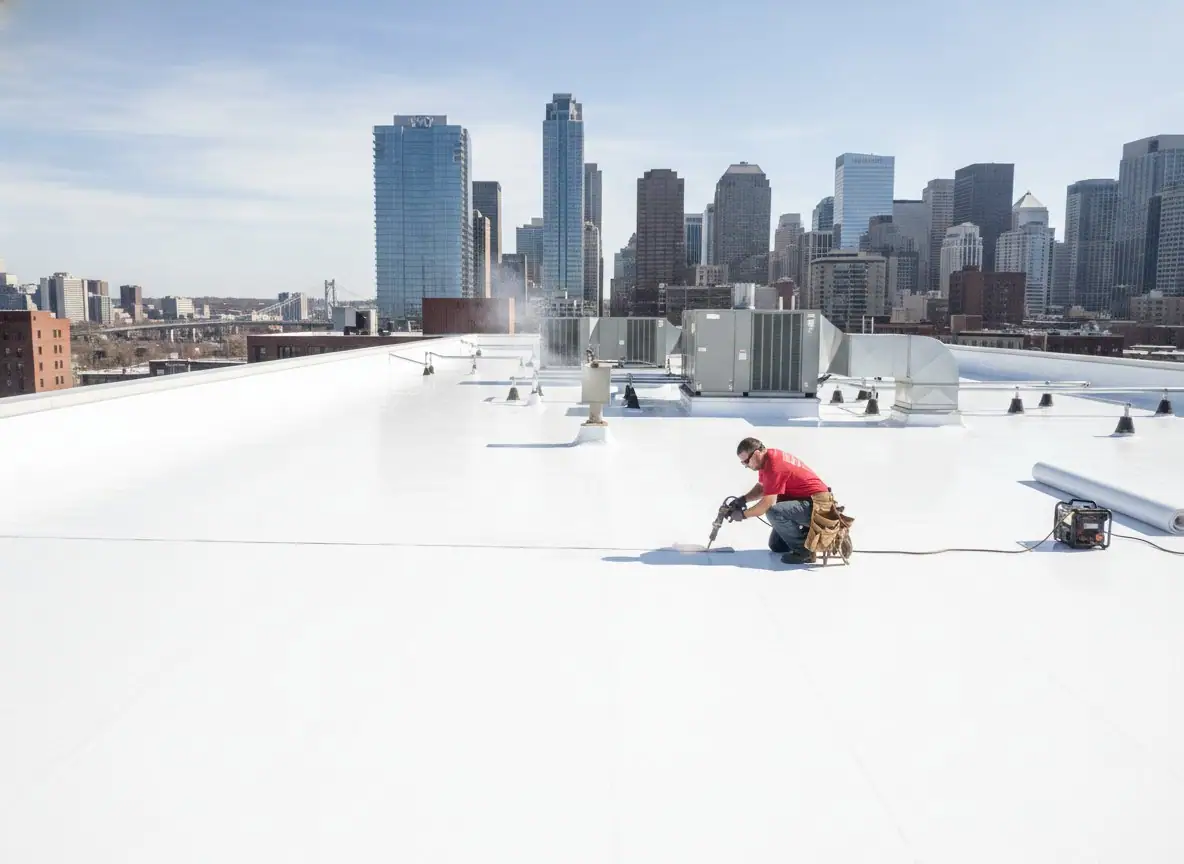
On flat and low-slope roofs, the steps are similar but use membrane base flashings, seam work and sometimes a roof coating application over the repaired area to extend protection. Seeing all those steps raises a fair question about whether a homeowner can do this work themselves.
At a glance
Can I fix roof flashing myself?
A handy homeowner can handle small, low-risk flashing fixes on a walkable roof. Rebuilding chimney, skylight, valley or wall flashing is usually a job for a professional because it requires removing shingles and working the layers in the correct order.
| Factor | DIY | Professional repair |
|---|---|---|
| Good fit for | Resealing an exposed nail head, replacing a cracked pipe boot on a low, walkable roof, clearing debris from a valley | Chimney, skylight, valley, wall and flat-roof flashing; any leak with an unknown source |
| Safety | Fall risk rises fast on steep or wet roofs | Proper fall protection and roof access equipment |
| Diagnosis | Easy to fix the wrong spot, since water travels before it drips | Source traced from the roof and attic |
| Materials | Often relies on caulk or roof cement | New metal, membrane and underlayment installed in layers |
| Hidden damage | Rotted decking often missed | Decking checked and replaced as needed |
| Insurance and documentation | Little or no record of the damage | Photos and notes that can support a claim |
If you try a simple fix, here are the basic DIY steps. Work only in dry weather on a low-pitch roof. Clean the area. Lift the shingle above the problem gently, without cracking it. Replace the boot or secure the loose piece with the correct fasteners. Seal exposed nail heads. Press the shingle back down. Call a pro if the leak continues, if you find soft decking, if the problem is at a chimney or skylight, or if the roof is steep or two stories up. Many homeowners compare the risk of a ladder fall against the price of a professional repair, which leads to the cost question.
At a glance
How much does roof flashing cost?
Flashing repair cost depends on where the flashing is, how much of it has to be rebuilt and what damage is found underneath. That is why we give a written quote after a free inspection instead of a one-size price.
| Cost factor | How it affects the price |
|---|---|
| Location and size | A single pipe boot is a small job. A full chimney perimeter, a long valley or a large skylight takes more material and labor. |
| Flashing material | Galvanized steel, aluminum, copper and membrane flashings differ in cost and in how they must be installed. |
| Roof pitch and access | Steep, high or hard-to-reach areas need more safety setup and time. |
| Tear-off around the joint | How many shingles must be removed and replaced, and whether matching shingles are available. |
| Decking and underlayment | Rotted sheathing and new underlayment or ice-and-water membrane add to the scope. |
| Masonry condition | Chimneys with failed mortar may need joint work before counter flashing will hold. |
| Roof type | Shingle, metal and flat membrane roofs each use different flashing methods. |
| Permits | Some larger scopes may require a permit. We will tell you if yours does. |
| Extent of interior damage | The longer a leak runs, the more the repair can grow. |
For more detail, see our overview of roof repair costs in Chamblee and the breakdown of roof leak repair costs. Financing is available for qualifying projects. Once you have a number in hand, the next question is usually whether that number is reasonable.
Is $500 expensive to replace roof flashing?
Whether any flashing quote is high or low depends on what it includes. The same total can be fair for one job and too high or too low for another.
When you compare repair estimates, line them up on scope, not just the bottom line:
- Is the old flashing removed? Or is the quote for caulk or a patch applied over it?
- Which flashing pieces are included? For a chimney, check whether the quote covers step, counter, apron and cricket, or only one side.
- Is underlayment or ice-and-water membrane replaced in the repair area?
- How is decking handled? Look for a clear note on what happens if rot is found.
- What material is specified? Look for the metal type and gauge or the membrane type.
- Is cleanup and debris removal included?
Read moreShow less
A low price that only covers sealant will often cost more later. A higher price that rebuilds the joint correctly is often the better value. A clear, itemized scope is what lets you judge, and that is what we provide. Here is what we offer in Chamblee.
Our flashing repair and waterproofing services in Chamblee
Top Notch Guard Roofing provides flashing repair and waterproofing for residential and commercial roofs in Chamblee. Choose the service that matches where your problem is:
How do I choose a roof flashing repair company?
Choose a roof flashing repair company that inspects before quoting, explains the source of the leak, puts the full scope in writing and rebuilds flashing instead of covering it with sealant.
- They inspect first. A quote given over the phone without seeing the roof is a guess. We offer free inspections and estimates.
- They show you the problem. Ask for photos of the failed flashing and an explanation of why it failed.
- The written scope is specific. It names the flashing pieces, materials, underlayment and how decking will be handled.
- They carry insurance. Ask for proof of insurance and any licensing information before work starts. Top Notch Guard Roofing is insured.
- They can help with storm damage claims. If wind or a falling limb damaged your flashing, we can help you document the damage and work through your insurance claim.
- They are available when it counts. Leaks do not wait for business hours. We offer 24/7 emergency service.
- They offer payment options. Financing is available if you need it.
FAQ
Frequently asked questions
How long does roof flashing last?
Properly installed metal flashing often lasts as long as the roof around it, and sometimes longer. Rubber pipe boots and sealant joints wear out much sooner. Lifespan depends on the material, installation quality, sun exposure and how well valleys and gutters are kept clear. In Chamblee, debris buildup and heavy summer rain shorten flashing life when water is left sitting against it.
What is the difference between flashing repair and flashing replacement?
A repair fixes a specific defect, such as resetting loose counter flashing, replacing a cracked boot or rebuilding one side of a chimney. A replacement removes all the flashing at a feature and installs new pieces in the correct order. We recommend whichever matches the condition we find during the inspection.
Can flashing be sealed with caulk or roof cement?
Caulk and roof cement can seal small gaps and fastener heads, or serve as a short-term patch. They are not a substitute for flashing. They dry, crack and pull away with heat and movement. If sealant is the only thing keeping water out, the flashing needs proper repair.
Does homeowners insurance cover flashing repair?
Coverage depends on your policy and the cause. Sudden damage from wind, hail or a fallen tree is more likely to be covered than wear and tear or a long-term leak. We can document the damage and help you with the claim process. Your insurer makes the coverage decision.
How do I know if flashing is causing my roof leak?
Leaks that show up near a chimney, skylight, exterior wall, valley or vent pipe, especially during wind-driven rain, often point to flashing. Look for rusted, lifted or caulk-covered metal on the roof and for stains or damp framing near those features in the attic. A free inspection can confirm the source.
For a free inspection and written estimate on roof flashing repair or waterproofing in Chamblee, call Top Notch Guard Roofing at 770-525-6302.
Why choose us
Why choose Top Notch Guard Roofing?
Free estimates
Get a clear, no-obligation estimate before any work begins.
Licensed & insured
Your property and our crew are protected on every project.
Residential & commercial
One team for homes, multi-family and commercial properties.
Locally owned & operated
A local team serving your community and the surrounding area.
Get in touch
Find roofing help near you
Request a free estimate online or give us a call — our team will follow up quickly.
- Call us770-525-6302
- Visit5449 Peachtree Rd, Chamblee, GA 30341
- HoursMon-Sun: 7:00 am – 7:00 pm