
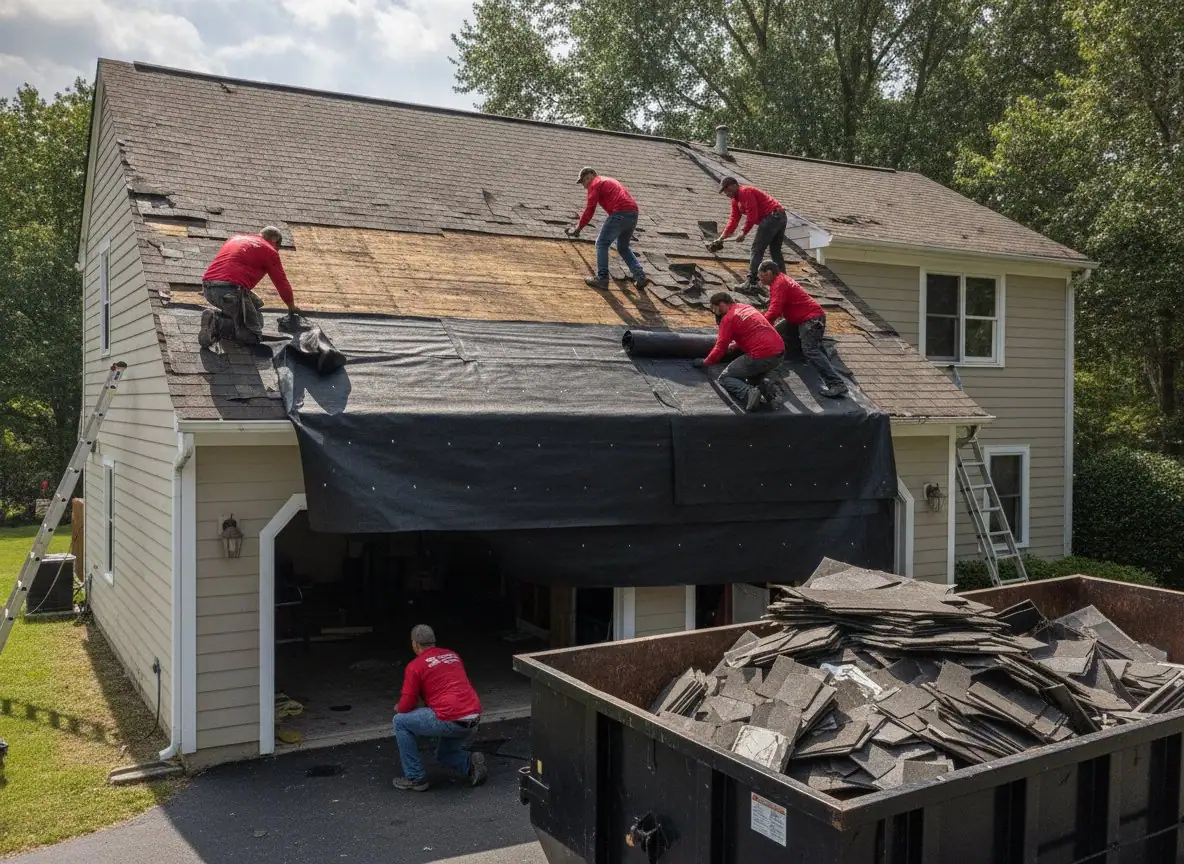
Roof Leak Repair in Chamblee, GA
Roof leak repair in Chamblee starts with finding where water actually gets through the roof, which is often not directly above the stain on your ceiling. Top Notch Guard Roofing tracks the leak to its source, fixes the failed shingle, flashing, or vent boot, and checks the decking and underlayment beneath it so the problem stays fixed.
This page covers how leak detection works, the most common causes and their fixes, what affects the price, how insurance may apply, and what to do right now if water is coming in. Inspections are free, and we answer calls 24/7 for active leaks in Chamblee.
What is the best way to fix a leaky roof?
The best way to fix a leaky roof is to find the true entry point, repair or replace the failed component there, and confirm the materials underneath are still sound. Sealing the spot where water shows up indoors rarely works. Water usually enters at a flashing seam, a vent, or a damaged shingle, then runs along the decking, rafters, or underlayment before it drips. The entry point is often 10 to 20 feet away from the ceiling stain. A lasting repair targets the damaged roof component, not the interior spot.
If water is coming in right now, take these steps before the permanent repair:
- Set a bucket or tub under the drip and lay towels around it.
- Move furniture, electronics, rugs, and valuables away from the wet area.
- If the ceiling is bulging with trapped water, keep people away from it. Turn off power to any light fixture or fan in the wet area.
- Check the attic only if you can do it safely. Use a flashlight, step only on joists, and look for wet insulation, dark wood, or active drips.
- Take photos of the ceiling, the attic, and anything that got wet. These help with an insurance claim.
- Do not climb onto a wet roof. In heavy rain, call for emergency roof tarping to keep water out until the weather clears.
- Have a local roofer make the permanent repair once the roof is dry and safe to work on.
Each of these steps depends on knowing where the leak starts, so the next question is how roofers find it.
How do roofers find where a roof leak really starts?
Roofers find the real source of a leak by working from the inside out. We trace the water path from the stain to the attic and then to the roof surface, and we test any suspected areas before we repair them. Our leak detection follows these steps:
- Interview and interior check. We ask when the leak appears (only in wind-driven rain, after long storms, or every time it rains) and note where the stain sits relative to chimneys, skylights, valleys, and vents.
- Attic inspection. We look for water trails on rafters and the underside of the decking, wet or matted insulation, rusted nail tips, and daylight coming through. Water stains often point uphill toward the entry point.
- Roof surface inspection. On the roof, we check shingles, flashing, vent boots, valleys, sealant joints, and gutters in the area above the water trail.
- Water testing when needed. If the source is still unclear, we run water on one section at a time, starting low and moving up, while someone watches from the attic.
- Decking check. We press on the decking around the source to find soft or rotted wood that needs replacing.
- Findings and written quote. We explain what failed, show you photos, and give you a written repair quote.
On most roofs, this process leads back to a short list of usual problems.
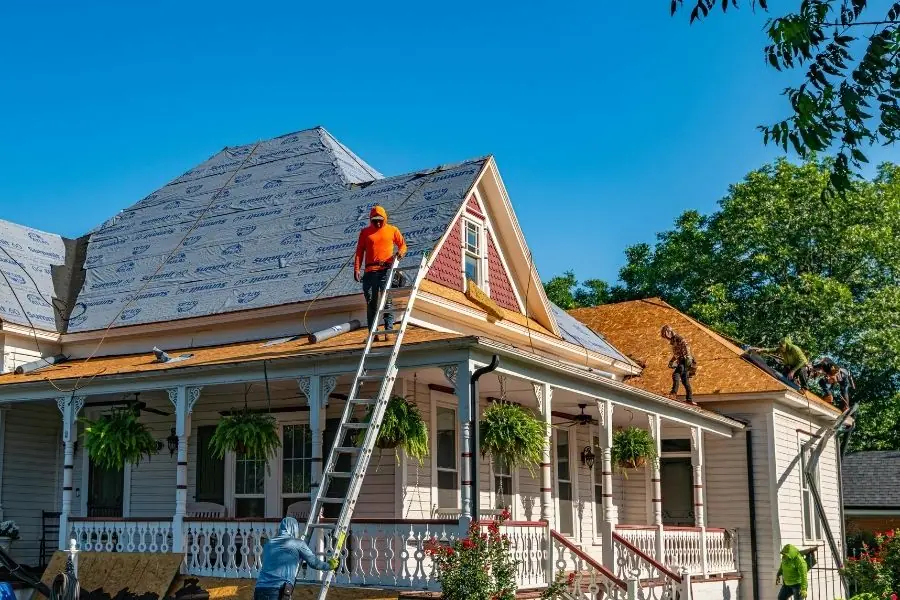
Free, no-obligation estimates
Talk to Top Notch Guard Roofing
Tell us what you need and we’ll take it from there.
At a glance
What are the most common causes of roof leaks and their fixes?
Most roof leaks come from a few sources: damaged or missing shingles, cracked plumbing vent boots, worn flashing at chimneys, walls, and skylights, failing valley flashing, clogged gutters, and decking that has gone soft. The table below matches each cause with what you might notice and the usual fix.
| Cause | What you may notice | Typical fix |
|---|---|---|
| Damaged or missing shingles | Shingles in the yard after wind, bare spots, cracked or lifted tabs | Replace the affected shingles and reseal surrounding tabs |
| Cracked plumbing vent boot | Stain near a bathroom or kitchen wall, drip around a pipe in the attic | Replace the rubber boot or the full vent flashing |
| Chimney flashing failure | Stains on the ceiling or wall beside the fireplace | Reflash with step and counter flashing, then waterproof the chimney if the masonry is absorbing water |
| Wall or sidewall flashing | Leaks where a roof meets a second-story wall or dormer | Replace step flashing and reseal the joint |
| Skylight flashing or seal | Drips at the skylight frame or stains on the shaft drywall | Repair skylight flashing and waterproof the curb and seals |
| Worn valley flashing | Leaks where two roof slopes meet, often during heavy rain | Valley flashing repair or replacement, with new underlayment in the valley |
| Clogged gutters | Water backing up under the first rows of shingles, fascia stains | Clear gutters and downspouts, then repair any damaged edge materials |
| Soft decking or mold | Sagging spots, spongy feel, musty attic odor | Replace rotted decking and underlayment, then fix the original source |
Nearly all of these can be repaired without replacing the whole roof, which is what most homeowners want to know next.
How to fix a leaky roof without replacing it?
You can fix most leaks without a full replacement by repairing only the failed area: new shingles, new flashing, a new vent boot, or a section of new decking and underlayment. A targeted repair makes sense when the rest of the roof is in fair condition and the damage is limited to one or two spots.
Depending on what we find, a repair may include:
- Component replacement of shingles, boots, or flashing pieces.
- Flashing repair at chimneys, skylights, walls, and valleys.
- Roof waterproofing at vulnerable seams and penetrations.
- Roof coating application on suitable low-slope or flat roof sections to seal the surface.
A repair may not be the right choice when shingles are failing across many slopes, when leaks keep showing up in new places, or when large areas of decking are soft. In those cases we will tell you plainly. You can see all roof flashing repair and waterproofing services we offer. Many people try a spray or tape product first, which raises the question of whether that works.
Will Flex Seal stop a leaking roof?
Flex Seal and similar spray-on or tape sealants can slow a small leak for a while, but they will not stop a roof leak permanently. These products need a clean, dry surface to stick, so they often fail when applied in the rain. They also cover the symptom and leave the cause in place. A cracked vent boot or lifted flashing will keep moving with heat and cold, and the sealant will eventually separate.
There are other drawbacks. A heavy sealant layer can trap moisture against the decking. It can hide the original problem from a roofer, and it can make a proper repair harder because the residue has to be removed first. If you use one as a stopgap, tell your roofer where you put it. A tarp is usually a better short-term measure. A real repair also takes less time than most people expect.
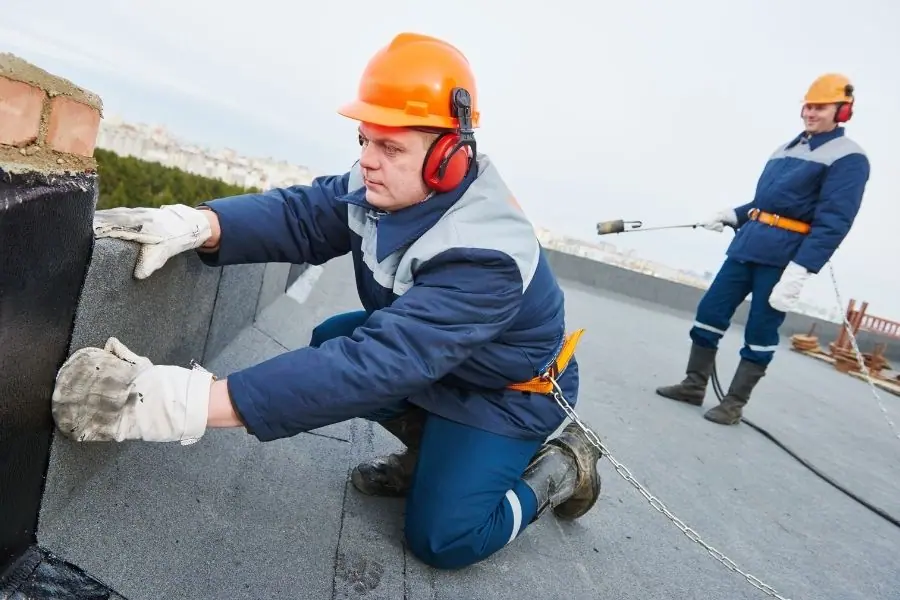
How long does a roof leak repair take?
Most roof leak repairs at a single point, such as a vent boot, a few shingles, or a short run of flashing, take a few hours. Larger jobs take longer:
- Shingle or vent boot repair: usually a few hours.
- Chimney, skylight, or valley flashing: often a half day to a full day, depending on access and how much material has to come off.
- Decking and underlayment replacement: can add time, depending on how far the rot has spread.
Weather matters most. We do not install permanent materials on a wet roof, so during a storm we can tarp first and return to make the repair once the roof dries. Time and scope also drive the price, which is covered next.
At a glance
How much will it cost to fix a leak in my roof in Chamblee?
The cost to fix a leak in Chamblee depends on what failed, how hard it is to reach, and whether the decking or underlayment underneath also needs replacing. You will see general cost ranges online for Atlanta-area repairs, but those are broad estimates. Your actual price comes after an inspection. We give you a written quote after a free inspection, before any work starts.
| Cost factor | How it affects the price |
|---|---|
| Leak source | Replacing a vent boot is simpler than reflashing a chimney or a valley |
| Size of the damaged area | More square footage means more materials and labor |
| Roof pitch and access | Steep, tall, or hard-to-reach roofs need more safety setup and time |
| Materials | Matching shingles, metal flashing, and coatings vary in cost |
| Tear-off | Removing old layers or failed sealant adds labor |
| Decking and underlayment | Rotted wood or wet underlayment must be replaced, which adds to the scope |
| Permits | Larger repairs may require one, depending on local rules |
| Extent of interior damage | Long-running leaks can mean more hidden damage to find and fix |
For more detail, see our page on roof leak repair cost in Chamblee or our general roofing cost guides. Whether that price feels expensive usually depends on timing.
Is it expensive to fix a leaky roof?
Fixing a leaky roof is usually not expensive when you catch it early. It gets expensive when it waits. A leak found quickly often needs only a component repair. A leak that runs for months can rot decking, soak insulation, stain drywall, and lead to mold, and each of those adds to the bill.
Two rules help keep costs down. Call when you see the first stain, drip, or missing shingle. And repair the source instead of repeatedly patching the surface. When the damage came from a storm or another sudden event, your homeowner's policy may help pay for it.
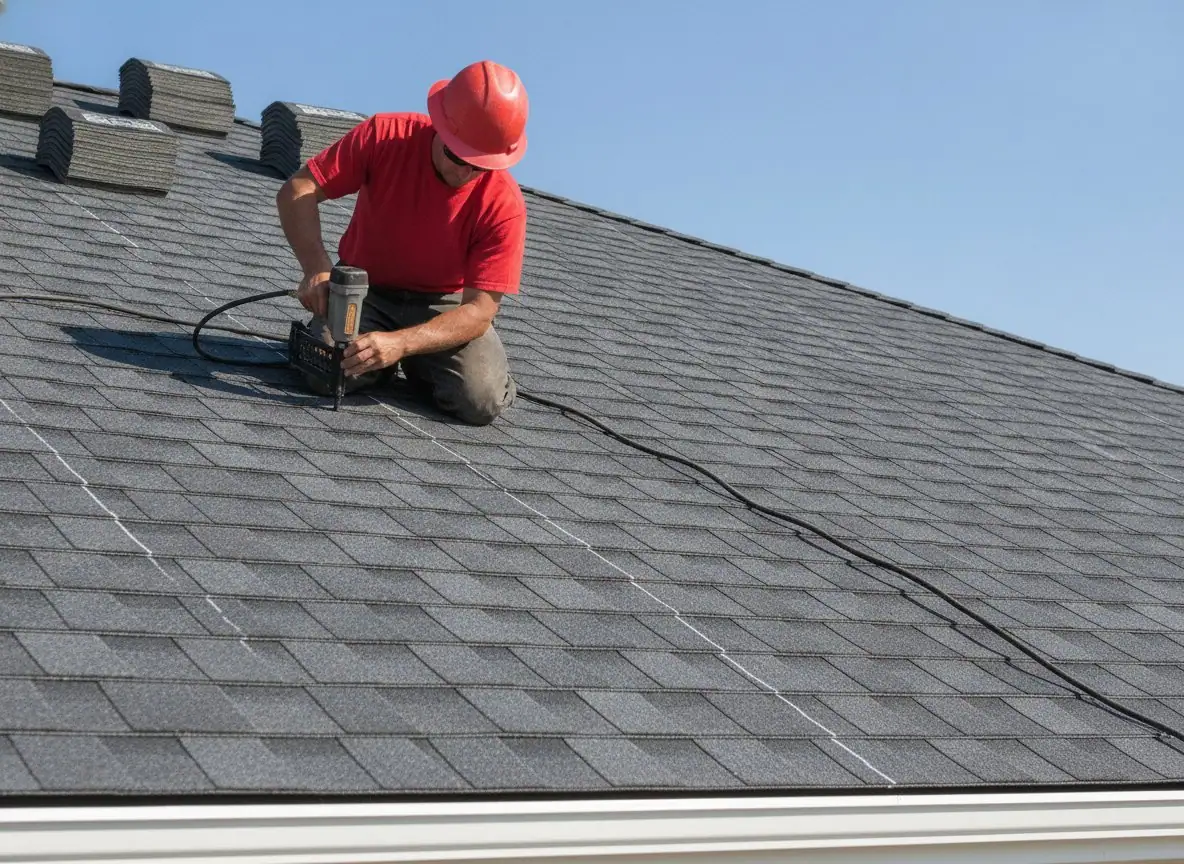
Is a roof leak covered by insurance?
A roof leak may be covered by insurance if it was caused by sudden, accidental damage, such as wind, hail, or a fallen limb. Leaks caused by age, wear, or lack of maintenance usually are not covered. Every policy is different, so check your own coverage and deductible.
We help homeowners with insurance claims in these ways:
- We document the damage with photos and written notes during the free inspection.
- We explain what caused the leak, which affects whether it is covered.
- We provide a written repair scope you can share with your insurer.
- We can meet with your adjuster to walk through the damage on the roof.
To protect your claim, take photos of interior damage, keep receipts for tarping or cleanup, and report storm damage promptly. If insurance does not cover the repair, or covers only part of it, financing is another option.
Financing and how to choose a roof leak repair contractor
Financing is available. If a leak repair or related flashing work does not fit your budget right now, ask about financing during your free inspection. That way, the repair does not have to wait while water damage spreads.
When choosing a roof leak repair contractor, look for one who:
- Inspects the attic and the roof before quoting, instead of quoting from the ground.
- Explains the cause of the leak and shows you photos.
- Provides a written quote that lists the scope and materials.
- Is insured and works locally in Chamblee.
- Recommends a repair when a repair is enough.
Why homeowners call Top Notch Guard Roofing:
- Insured
- 24/7 emergency service for active leaks
- Free inspections and estimates
- Help with insurance claims
- Financing available
- Specialized flashing work for chimneys, skylights, and valleys, along with waterproofing and roof coating
Read moreShow less
You can learn more about us or visit Top Notch Guard Roofing in Chamblee.
Before and after photo gallery: Photos of completed leak repairs, flashing replacements, and waterproofing projects will appear here.
Once you know what to look for, the next step is getting the roof inspected.
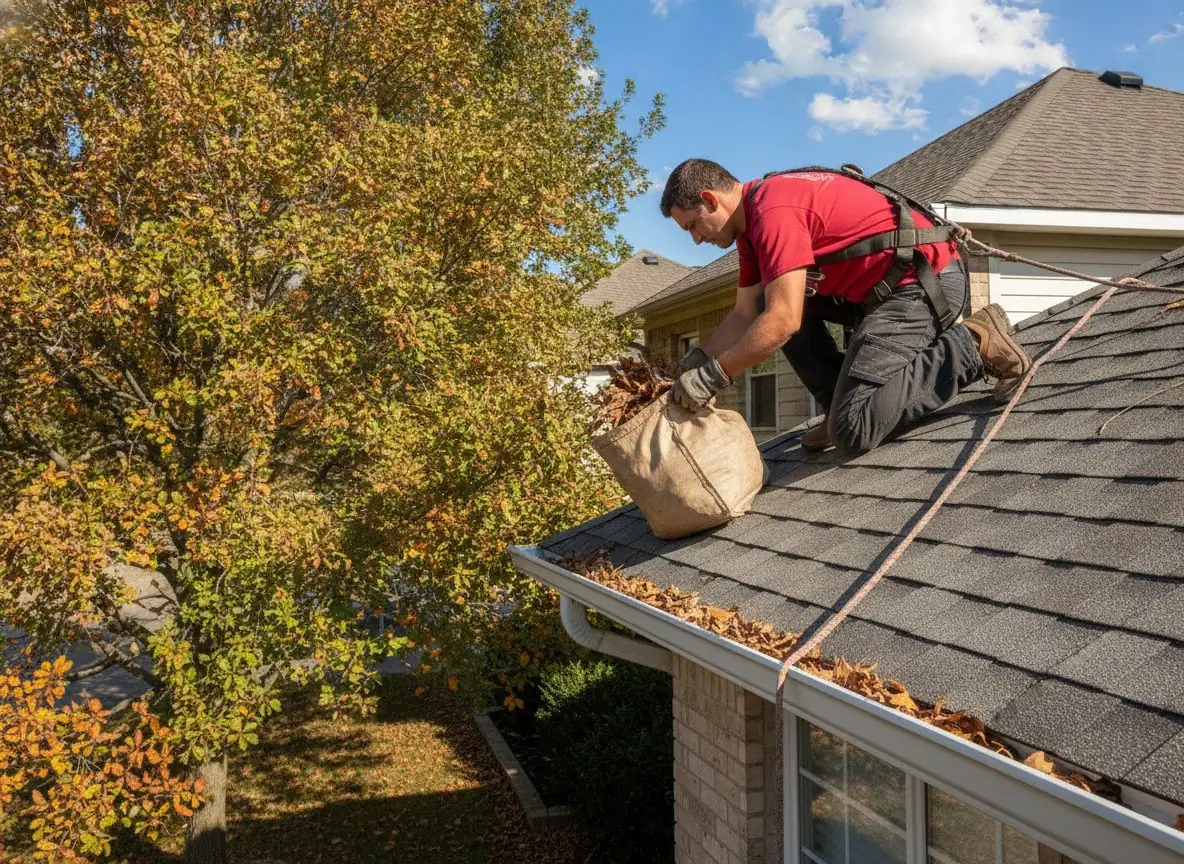
Book your free roof leak inspection in Chamblee
To book a free roof leak inspection, call 770-525-6302 any time, day or night, or fill out the free inspection form on this page. We will trace the leak to its source, document what we find, and give you a written quote. If water is coming in during a storm, we can tarp the roof first and make the permanent repair once it is dry. You can also reach us through our contact page.
FAQ
Frequently asked questions
Can I stop a roof leak myself in the rain?
Do not go on the roof in the rain. Wet shingles are slippery, and sealants will not bond to a wet surface. Inside the house, catch the water, move your belongings, and take photos. Then call for emergency tarping. We make the permanent repair once the roof is dry.
How do I know if the leak is from the roof or from plumbing?
Roof leaks usually show up during or after rain and get worse in heavy or wind-driven storms. Plumbing leaks happen whether it rains or not, and they often appear near bathrooms, kitchens, or water heaters. If a stain grows on dry days, call a plumber. If it appears only with rain, have the roof inspected. Note that a cracked roof vent boot can look like a plumbing leak because it sits over a pipe.
Do you repair leaks around chimneys and skylights?
Yes. We provide chimney flashing repair, chimney waterproofing, skylight flashing repair, and skylight waterproofing. These are some of the most common leak points we see.
Will my ceiling stain go away after the repair?
No. The roof repair stops new water from coming in, but the existing stain stays. Once the area is fully dry, the drywall can be primed with a stain-blocking primer and painted. If the drywall is soft or sagging, it should be replaced.
How soon should I call after noticing a leak?
Call as soon as you notice it. Even a small drip can soak insulation and rot decking over time, and quick documentation helps if you file an insurance claim. We offer 24/7 emergency service. Call 770-525-6302 for a free inspection.
Why choose us
Why choose Top Notch Guard Roofing?
Free estimates
Get a clear, no-obligation estimate before any work begins.
Licensed & insured
Your property and our crew are protected on every project.
Residential & commercial
One team for homes, multi-family and commercial properties.
Locally owned & operated
A local team serving your community and the surrounding area.
Get in touch
Find roofing help near you
Request a free estimate online or give us a call — our team will follow up quickly.
- Call us770-525-6302
- Visit5449 Peachtree Rd, Chamblee, GA 30341
- HoursMon-Sun: 7:00 am – 7:00 pm